
Commercial disclosure: FansFlux and Penmowu are operated by the same owner. This guide includes commercial references to Penmowu. Provider information is based on public descriptions, not a hands-on delivery test.
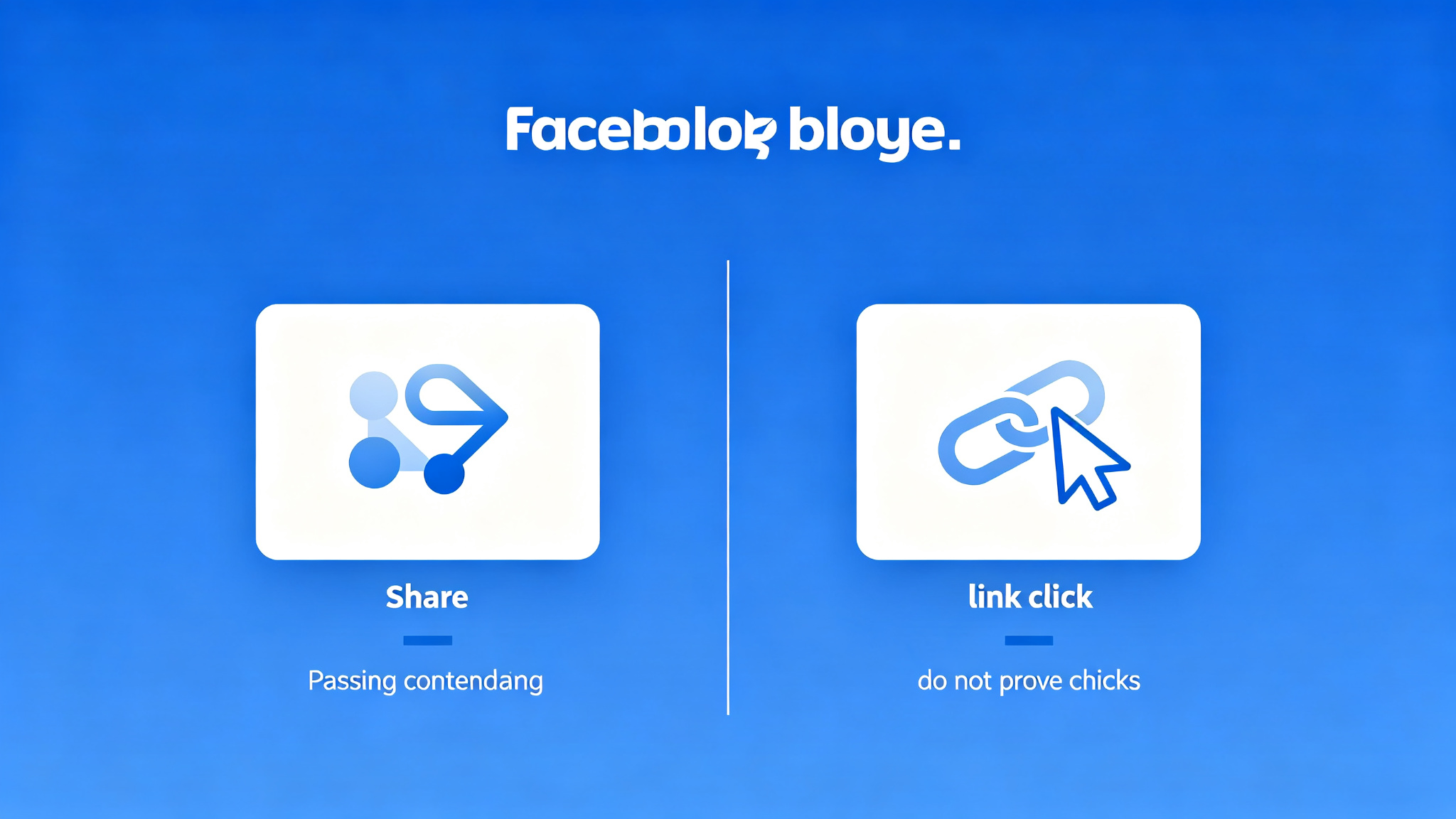
A Facebook share can distribute a post, while a link click is an action toward a destination. One does not prove the other. A campaign report that converts shares into website visitors without measurement is guessing.
This distinction matters when comparing services because a share package usually describes an on-platform action. It should not be interpreted as a traffic package unless the product explicitly defines and reports a separate website action.
Draw the path you intend to measure
For a business article, the intended path might be post exposure, interest in the content, a link click, a loaded page and an inquiry. Each stage answers a different question.
A share can occur without the person opening the linked website. A website visit can occur without the visitor sharing the post. Some readers may return later through another route altogether.
The report should therefore keep shares, clicks and website outcomes in separate fields. Adding them together does not produce a meaningful audience total.
Identify the shared object
A Facebook Page may publish a post, share someone else's post or reshare one of its own items. Check whether a service targets the original content or the particular share.
Penmowu has Facebook sharing and other engagement entries with their own target requirements. Read the selected description before assuming an order covers the external URL inside the post. Penmowu public service catalog
The Facebook post URL and your website's landing-page URL are different destinations. Store both in the campaign record, with clear labels.
A worked reporting example
Imagine a fictional workshop announcement receives 80 shares, while the website analytics reports 45 campaign-tagged sessions and the booking system records three attributable reservations. Those are three different observations.
Do not write “80 new customers reached our website.” Do not calculate a share-to-sale conversion rate as though every share came from a unique person who then visited. Without linked evidence, the relationship is only contextual.
The useful conclusion is narrower: the post accumulated sharing activity, the tagged link produced recorded visits, and some visits were associated with bookings under the measurement setup used.
Tag the website link consistently
Campaign parameters can help distinguish visits associated with different placements. Google Analytics documents the use of source, medium and campaign parameters for this purpose. Google Analytics: campaign URL parameters
Choose a readable naming convention, such as source facebook, medium social and a campaign name describing the workshop. Test the final link and its redirects before sharing it. Do not place customer names, email addresses or other private information in URL parameters.
Tags assist attribution; they do not prove that a visit was unique, human or caused by a specific sharing service. Keep those limitations in the report.
Check the landing experience before buying distribution
Open the page on a phone. Confirm that the headline matches the post, the main action works and the page is usable without unnecessary obstacles. A campaign cannot be evaluated fairly when the advertised destination is broken.
Also make the shareable content genuinely useful. A clear event date, suitable audience and registration explanation are more actionable than a generic request to share.
Comparing a share service responsibly
Inspect Facebook share options on Penmowu as on-platform service descriptions, not assumed website-traffic guarantees.
If your primary goal is visits or reservations, compare methods that can report those outcomes and maintain a separate website measurement plan. Shares can be one campaign signal, but treating them as completed visits hides the part of the journey your business actually needs to understand.