
Commercial disclosure: FansFlux and Penmowu are operated by the same owner. This guide includes commercial references to Penmowu. Provider information is based on public descriptions, not a hands-on delivery test.
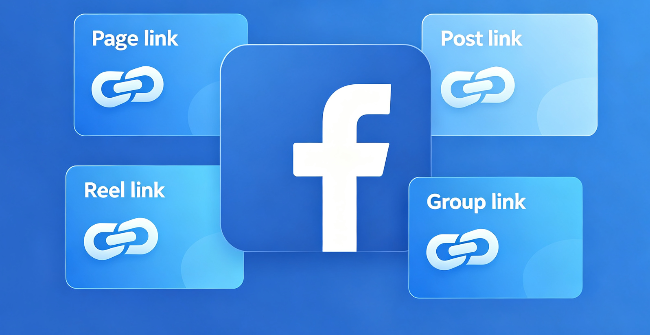
Facebook can show a Page, profile, post, Reel and group under similar names. Their links identify different objects, so the correct destination depends on the service you are evaluating.
Before ordering, match the action to the object. Page followers, post reactions, Reel views and group members should not all be submitted using one generic Facebook homepage link.
Start with a target map
For a Page-level service, identify the Page. For a post-specific action, open the individual post. For a Reel, open the intended Reel rather than the surrounding profile grid. For group membership, identify the group and its admission conditions.
Penmowu's Facebook category contains multiple service types with their own link requirements. Check the selected entry instead of assuming all Facebook URLs are accepted. Penmowu public service catalog
Save the target type beside the URL so another team member can verify the order without guessing from a long address.
Copy the link from the destination itself
Open the object and use the available share or copy-link control. On a desktop browser, an address can be useful when the specific object is open, but an address copied from a feed or search view may not identify the intended item.
Reopen the copied link and check the Page or profile name, content and publication context. Do not rely solely on the preview image; businesses often reuse the same creative across posts and formats.
Menu names can vary by device and account. The goal is a verified destination, not a rigid sequence copied from an outdated screenshot.
Distinguish an original post from a share
Imagine a fictional hotel sharing a tourism board's video. The hotel's share and the tourism board's original video are connected but distinct objects.
Decide which one the service concerns and which counter you will measure. A post reaction on one should not be expected to appear on the other merely because both display the same video.
The same principle applies when content is cross-posted between accounts or platforms. An Instagram link does not automatically identify the Facebook version of the content.
Check access without weakening privacy
A link that opens for an administrator may not be accessible to the audience or provider. Review the object's intended audience and current availability.
Facebook offers audience controls for Reels and other content. A public requirement in a supplier description should be considered separately from your privacy choice. Facebook Reels audience settings
Do not make a private group public, remove legitimate admission checks or share an administrator login simply to accommodate an unsuitable order. Ask about compatibility before committing funds.
Maintain a correction-friendly record
Record the original URL, target type, service ID, baseline metric, submission time and order number. If the content is deleted or replaced, preserve the original record and explain the change to support.
A new upload may have a new destination even when its title and creative are identical. Do not assume a provider automatically transfers an order or that placing a second order fixes the first one.
For private invitations, use an appropriate private support channel and avoid exposing access links in public screenshots.
Final pre-submission check
Read the relevant Facebook service description on Penmowu. Confirm that the service name, target object and accepted link format all refer to the same destination.
A good link record takes very little space, but it prevents several avoidable mistakes: growing the wrong identity, reacting to the wrong post, ordering views for the wrong video, or treating a group invitation as a Page address.