

Commercial disclosure: FansFlux and Penmowu are operated by the same owner. This guide includes commercial references to Penmowu. Provider information is based on public descriptions, not a hands-on delivery test.
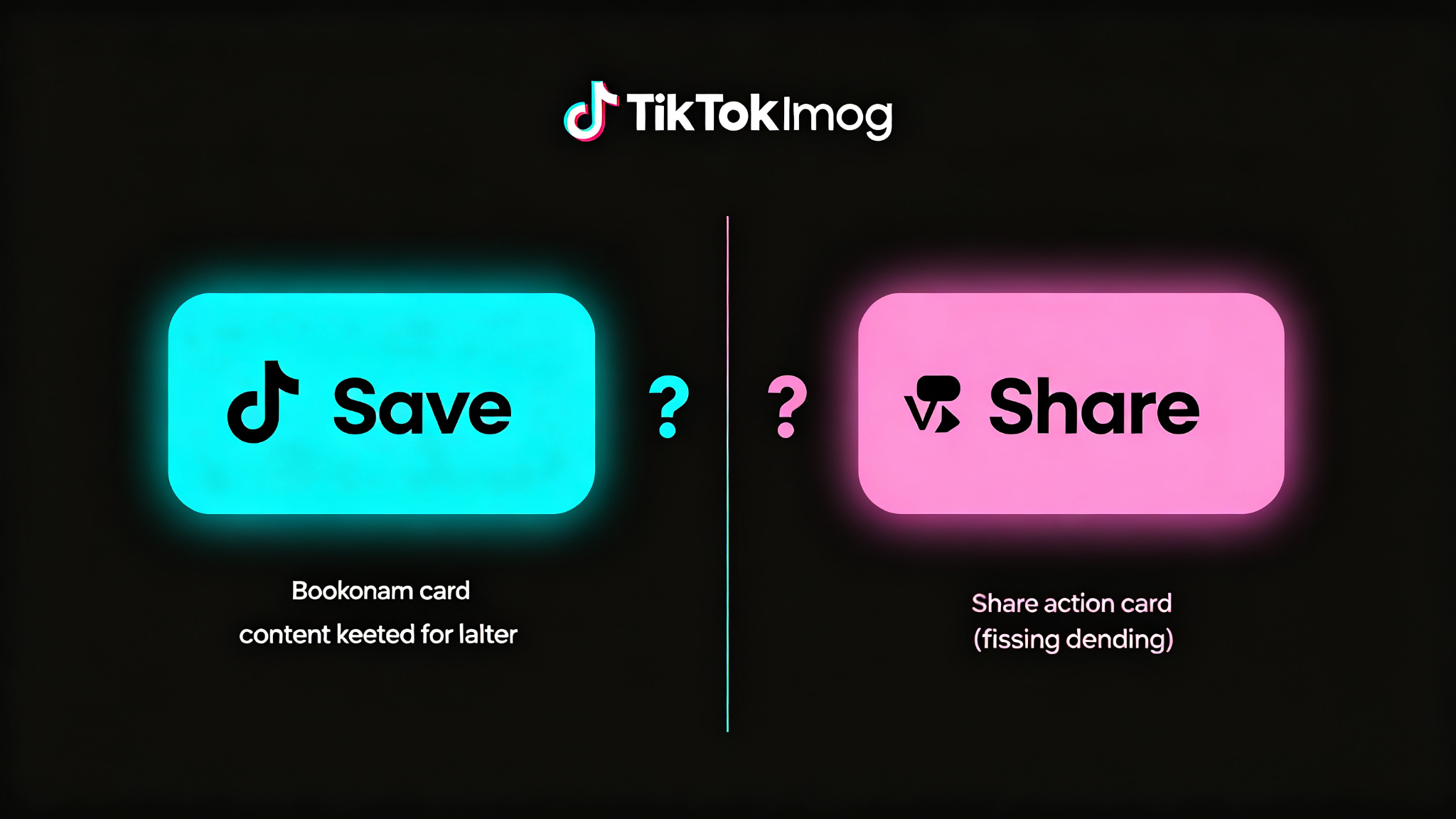
A TikTok save and a TikTok share answer different questions. One concerns keeping content for later; the other concerns passing it onward through a sharing action. A service package using either label needs a precise definition. Neither counter, by itself, tells you that someone became a customer or that the video earned additional recommendation traffic.
For a creator comparing services, the useful starting point is the viewer action—not a claim that one metric is the algorithm's secret favorite.
Define the action in the offer
Ask whether “save” means adding a post to favorites or downloading a video. Those are not interchangeable descriptions. Likewise, ask whether a “share” package refers to the native share counter, actual delivery to another person, or some other activity.
The distinction is contractual as well as analytical. A seller should explain the output it proposes to deliver and the record it uses to judge completion. Do not assume that a short service title answers those questions. If the description remains ambiguous, there is no meaningful way to compare its unit price with another offer.
Match the metric to your content
Consider two fictional videos from a furniture restorer. One shows a useful sanding checklist; the other shows a dramatic before-and-after transformation. A voluntary save of the checklist might reflect a wish to reuse the advice. A voluntary share of the transformation might reflect a wish to show it to a friend.
Those are plausible interpretations, not facts about any individual viewer. A numerical service cannot supply the missing intent. Avoid reporting a bought save as evidence that a prospect plans to follow the checklist or a bought share as proof of a personal recommendation.
Compare the same object and reporting window
Record the specific video, the metric label shown in its analytics and the time at which you record the baseline. Keep the same observation window after the campaign. Comparing a seven-day save count with a one-day share count does not produce a useful content conclusion.
Use a simple ledger: video link, content purpose, action being measured, starting count, later count and any paid intervention. A change between two screenshots is an observed change—not automatically verified delivery from one provider, because other activity may occur during the same period.

Separate price from interpretability
A hypothetical package of 100 saves for $3 and another of 500 shares for $3 have the same price but different outputs. Neither is “five times better” merely because one promises five times as many units. The example is invented to illustrate the comparison, not to quote any supplier.
Choose a purchasing brief that names the required action. Compare minimum quantities, link requirements and after-sales conditions only after the output matches. A bundle should state the number of each action separately; an undifferentiated “engagement total” conceals what the money is buying.
Use organic evidence for creative decisions
For content planning, inspect the questions people ask and the actions that genuinely follow a video. A checklist that people voluntarily revisit may deserve a follow-up. A surprising demonstration that prompts relevant questions may deserve a longer explanation.
Do not prescribe a magic save-to-share ratio or buy interactions to make a video resemble a benchmark. No evidence in this guide establishes a universal threshold that triggers distribution. Paid activity also makes a before-and-after creative test harder to interpret, so mark it clearly rather than treating it as natural audience preference.
Check Penmowu's specification before choosing
Readers can consult Penmowu's TikTok service catalog to inspect the descriptions attached to individual entries. Penmowu public service catalog Confirm the action, the destination link and the definition of completion; do not infer a delivery method from the category name alone.
The practical conclusion is simple: use saves and shares as distinct labels, preserve their limits and keep business outcomes separate. A more understandable order is more useful than a larger unexplained engagement number.
References